

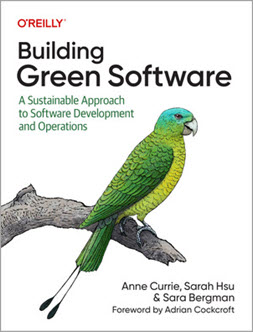
Recommended.
This is a relatively new topic, so things are changing. However, the book makes this clear. The authors provide several general principles, encompassing a variety of areas, from cloud to software architecture, trying to give timeless metrics to consider.
The book starts by introducing some terminology. For example, they talk about carbon efficiency: trying to use less power and less hardware per unit of work. They also define carbon awareness: for example running jobs when low-carbon sourced electricity is available. A large part of being green therefore involves reducing use, in particular of electricity and trying to ensure hardware lasts. How many of us have upgraded a mobile phone or similar because it would no longer update?
There are 13 chapters, starting with an introduction then ‘building blocks’ defining terms. Next, code and operational efficiency are considered. A compiled language, such as C++ will be more efficient than one that is interpreted each time it’s run, such as Python. But demanding a rewrite in a different language might not be sensible. It depends on your company’s circumstances. In fact, the authors say “It depends” on many occasions. On the face of things, that can feel evasive, but this is a complicated topic and the book got me thinking.
Operational efficiency considered power usage effectiveness. For example, they took a DevOps/site reliability engineering (SRE) perspective, looking at auto-scaling/right sizing. Much of this focused on using a cloud, though not exclusively. A nice side effect of considering power usage is reduced costs (often) and increased resilience. If you never turn off a service because you aren’t sure it will restart properly, you will be in trouble if there’s a power outage. It would be sensible to avoid getting in such a situation.
They then look at carbon awareness and hardware efficiency. Reducing power consumption is one thing, but hardware contains embodied carbon. If you can make your hardware last longer, you obviously save money, but also use fewer resources. How often have you abandoned working hardware because you couldn’t get a software update on an old OS or similar?
They then discussed green machine learning, and considered measuring and monitoring, for example checking your costs and electricity usage. The rounded up with a green software matrix, showing things to consider. Just being aware there is an issue was a starting point. Actually doing something about it was the next step. They end by pointing out this book is just a starting point, and things will change over time. The book is littered with great quotes, so I shall end with one:
It’s not easy being green
~ Kermit the Frog
Website: https://www.oreilly.com/library/view/building-green-software/9781098150617/